
Africa still leads with entrepreneurial energy.
Across the continent, young founders and small businesses continue to build bold, locally relevant solutions, from fintech and agritech to edtech and climate services. Yet the environment they operate in is changing fast: economic shifts, local policy hurdles, infrastructure gaps, and persistent funding inequalities are reshaping which startups survive and scale.
Key Challenges (as of today)

Access to finance remains uneven
While venture capital and angel networks have expanded, funding is unevenly distributed (geographically and by sector) and largely denominated in foreign currency. That makes startups vulnerable to exchange-rate swings and rising global interest rates, which can reduce deal flow, increase the cost of capital, and scare off foreign investors. At the same time, many small businesses still rely on informal credit or microloans that aren’t sufficient for scaling.
Why it matters: less capital and higher financing risk slow growth, delay hiring, and block investment in product development.
Macroeconomic volatility – inflation and currency risk
Several African economies are still contending with high inflation and volatile local currencies. For startups that import hardware, pay salaries in foreign currency, or depend on foreign investors, sudden depreciation and inflation spikes dramatically raise operating costs and reduce margins. Investors respond by tightening terms or pausing new commitments.
Digital & physical infrastructure gaps
High-speed internet, stable power, logistics and reliable payment rails remain inconsistent across many markets. That raises customer acquisition costs (poor connectivity reduces digital reach), increases delivery times, and forces companies to invest more in local solutions (e.g., offline-first apps, generators, manual logistics). Startups in well-connected hubs (Nairobi, Lagos, Cape Town) have an advantage that isn’t widely replicable yet.
Regulation, policy complexity and slow implementation
Entrepreneurs often face ambiguous or fragmented rules across national borders: licensing complexity, tax uncertainty, and inconsistent data governance rules complicate cross-border scale. For founders trying to leverage the African Continental Free Trade Area (AfCFTA), non-tariff barriers, customs frictions and differing digital rules can dampen the potential of a single continental market.
Talent and managerial capacity constraints
Africa has a large pool of talent, but startups frequently cite shortages in specific technical skills (advanced data science, cloud engineering) and commercial skills (sales, scaling operations, financial planning). This skills bottleneck makes it harder to turn product-market fit into sustainable growth. Partnerships with universities and upskilling programs are growing but uneven.
Persistent gender and inclusion gaps
Women founders continue to receive a disproportionately small share of investment capital, despite high rates of female entrepreneurship. Structural bias in funding, smaller networks, and lower visibility in pitch circles maintain a large gender funding gap, a missed opportunity for inclusive growth. Closing this gap could deliver substantial GDP and employment gains across the continent.
Climate risk & supply-chain fragility
Extreme weather, water stress and climate shocks affect agriculture-dependent businesses and can disrupt supply chains. At the same time, the cost and availability of climate-resilient inputs shape which ventures will survive long term. Entrepreneurs are innovating (e.g., climate-smart agriculture, off-grid energy), but scaling those solutions requires finance and supportive policy.
Market fragmentation and integration challenges
The AfCFTA is a structural opportunity: it promises a larger regional market and lower tariff barriers, which could help startups scale across borders. But practical challenges (harmonizing standards, logistics, local content rules) limit immediate gains. For many early-stage ventures, incremental local expansion still looks easier than jumping into pan-African operations.
What to Expect in 2026: Emerging Trends & New Dynamics for Entrepreneurs

Based on recent regional economic forecasts and global conditions, here’s how 2026 could shape up for entrepreneurship in Africa – including potential opportunities and new risks.
A modest economic tailwind, but uneven recovery
-
According to the African Development Bank (AfDB), Africa’s economy is projected to grow by about 4.3 % in 2026, up slightly from 2025. Learn more
-
This growth may provide a more supportive macroeconomic backdrop for demand, consumer spending, and business expansion, offering opportunities especially in high-growth sectors such as agribusiness, digital services, healthcare, and manufacturing. Learn more
-
However; even with growth – wages, job creation and per-capita income gains are likely to remain modest. In many places, new jobs may continue to be in informal or low-productivity sectors. Learn more
Implication for entrepreneurs: Demand may grow, but consumer spending power will remain constrained. Startups that hit affordability and value-for-money sweet spots may fare better than premium-priced solutions.

Inflation easing, but currency & external financing risks linger
-
Across many African economies inflation is forecast to ease in 2026 compared to recent years.
-
A weaker global dollar and stabilizing currencies are cited among factors supporting disinflation in some markets.
-
However, financing remains a global challenge: tighter global credit, rising interest rates in major economies, and heightened scrutiny of emerging-markets risk may limit foreign capital inflows into African startups, or drive up the cost of capital.
Implication for entrepreneurs: There could be a window of relative macroeconomic stability, but startups should continue to hedge currency exposure, diversify funding sources (local investors, grants, revenue-based financing), and manage burn carefully.
Growing opportunity for regional trade & cross-border scale, if logistics and policy improve
-
As macro indicators stabilize, momentum for regional trade under AfCFTA may increase, offering entrepreneurs a chance to expand beyond domestic markets.
-
Countries with improving infrastructure and trade facilitation may become hubs for cross-border supply chains and pan-African services.

-
However, scaling across countries will still depend heavily on logistics, regulatory harmonization, and ability to manage multi-jurisdiction risks. The structural challenges remain.
Implication: Startups that build with cross-border scale in mind (modular supply chains, regulatory compliance capacity, multi-market customer models) may gain early advantage, but only if they invest in execution and resilience.
Human capital & talent gap remains, but demand for skilled workforce increases
-
A growing economy and expanding digital sectors will increase demand for technical and managerial skills, from cloud engineering, data analytics to operations, marketing, logistics.
-
Yet the supply of trained professionals, especially outside big cities or outside tech hubs, is unlikely to keep up without deliberate training efforts.
Implication: Founders should prioritize building in-house capacity or partnering with training/education providers. Organizations or networks that support skills-building and capacity development may become increasingly important.
Climate, sustainability & “impact-first” entrepreneurship may become more mainstream
-
With fluctuating commodity prices, climate-related shocks and pressure on resources, demand for sustainable, climate-adaptive solutions (renewable energy, sustainable agriculture, circular economy models, climate data services) is likely to increase.
-
Entrepreneurs who integrate resilience and sustainability into their business models may win, both from domestic demand and from international investors increasingly interested in impact.
Implication: This is a growing niche for startups focused on social impact, sustainability, climate adaptation or green-tech solutions.
Inclusion and diversity could become a stronger part of investment narratives, but structural bias remains
-
As ecosystems mature, there’s growing recognition (locally and internationally) of the value of inclusive entrepreneurship: women-led enterprises, youth-owned SMEs, rural-based ventures, etc.
-
Still, systemic issues (limited networks, bias, lack of targeted capital) will persist, meaning inclusion-focused support remains essential.
Implication: Founders from underrepresented backgrounds (especially women, rural entrepreneurs) may find increasing support from social-impact funds, grants, networks; but will need to work harder on visibility, preparation, and investor readiness.

What this means for entrepreneurs in 2026: Strategic Takeaways
-
Think regional, not just local: With some macroeconomic stability, regional expansion under AfCFTA could be more viable, but only for ventures prepared to manage cross-border complexity.
-
Prioritize cost-efficient models and resilience: As inflation eases but global financing tightens, businesses with lean burn, diversified revenue, and minimal reliance on imports may have advantage.
-
Invest in talent and operations early: The gap between demand for skilled talent and supply remains, startups who invest in capacity building or partner with training initiatives may gain a competitive edge.
-
Embrace sustainability and impact: Climate-resilient, socially conscious business models may attract both local demand and international funding.
-
Leverage inclusion as strength: Female-led or underrepresented-founder ventures may stand out more, especially if they craft clear value propositions and investor narratives around impact plus growth.
What EUSMS will focus on in 2026
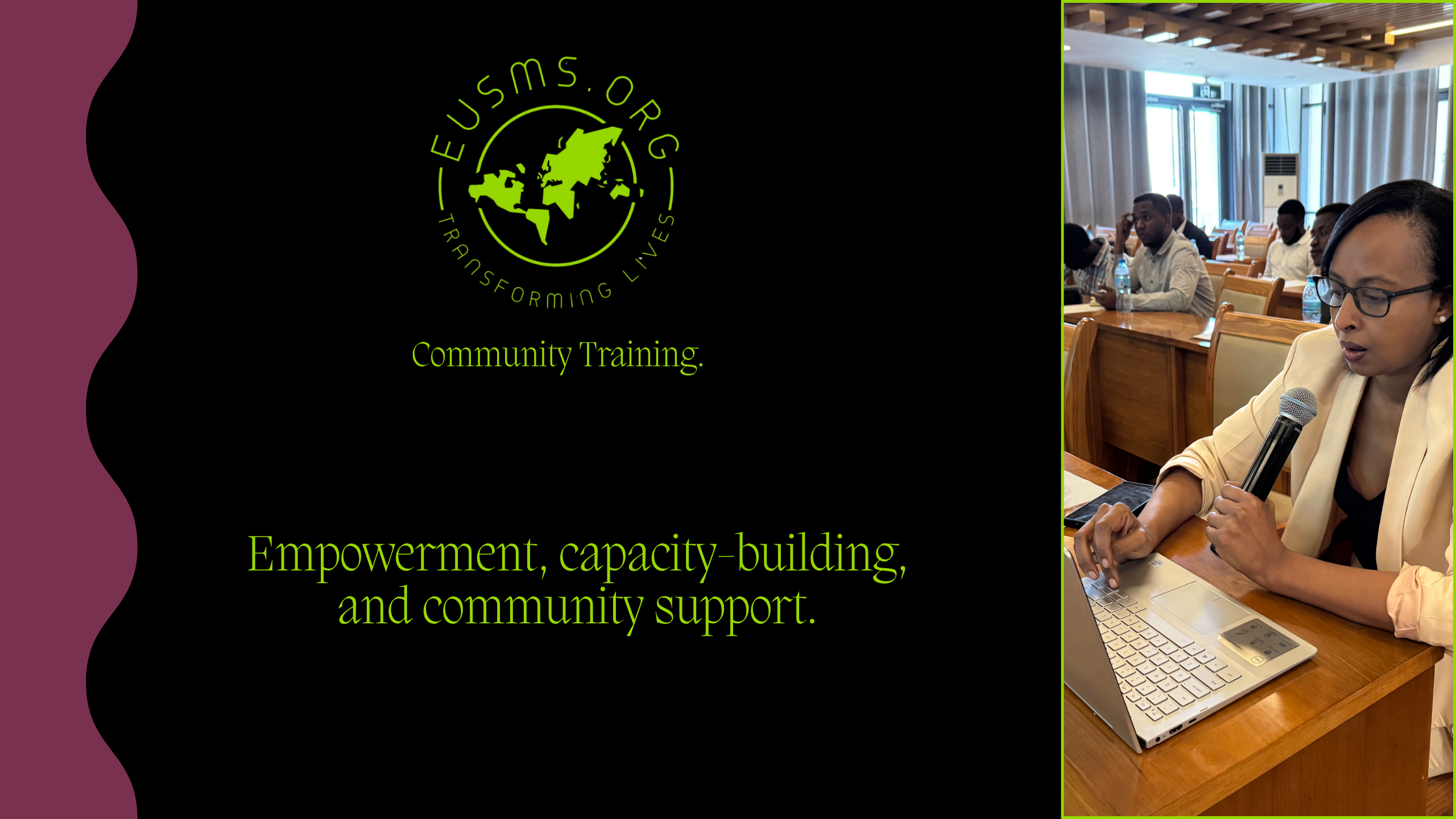
Given the evolving environment, here’s how EUSMS will sharpen its support to maximize impact:
-
Scale capacity-building efforts further: Expand training and mentorship, especially for founders outside major urban hubs, to build technical, managerial, and financial-planning skills.
-
Facilitate cross-border networks and partnerships: Help founders navigate regulatory and logistical barriers, build regional supply-chains, and identify export or expansion opportunities under AfCFTA.
-
Promote sustainable & impact entrepreneurship: Support climate-smart, green, and socially inclusive ventures, providing them with resources, networks, and access to impact-aligned funding.
-
Support inclusion & diversity: Amplify programs for women founders, rural entrepreneurs, youth-led ventures, letting them tap into networks, visibility, and investor readiness training.
-
Offer tools for resilience: Provide resources around FX risk management, lean operations, supply-chain planning, and contingency strategies, helping startups survive macroeconomic fluctuations.
2026: A Year of Opportunity for Prepared, Resilient Entrepreneurs
2026 looks to be a mixed but hopeful year: modest economic growth, easing inflation, rising demand, but continued structural challenges. For entrepreneurs who plan carefully, stay lean, invest in skills and resilience, and think regionally, the coming year could offer meaningful opportunities.
With EUSMS aligning its support around capacity-building, networks, inclusion and sustainability, the organization is well-positioned to help founders not only survive but grow and scale for impact.
AUTHOR: DOROTHY KWAMBOKA