In the social sector, we are taught to celebrate the solution, the clean water, the full classroom, and the delivered meal. But an entrepreneurial lens reveals an uncomfortable truth: a solution without a system is not a victory. It is a delay.
True Social Entrepreneurship is not the act of answering a question. It is the discipline of rewriting the logic of the environment that keeps producing the same question. At EUSMS, this distinction sits at the heart of everything we build. We do not simply deliver interventions; we design architectures of change resilient enough to outlast the problems they were created to solve.
Beyond the Quick Fix: The Power of Systems Thinking
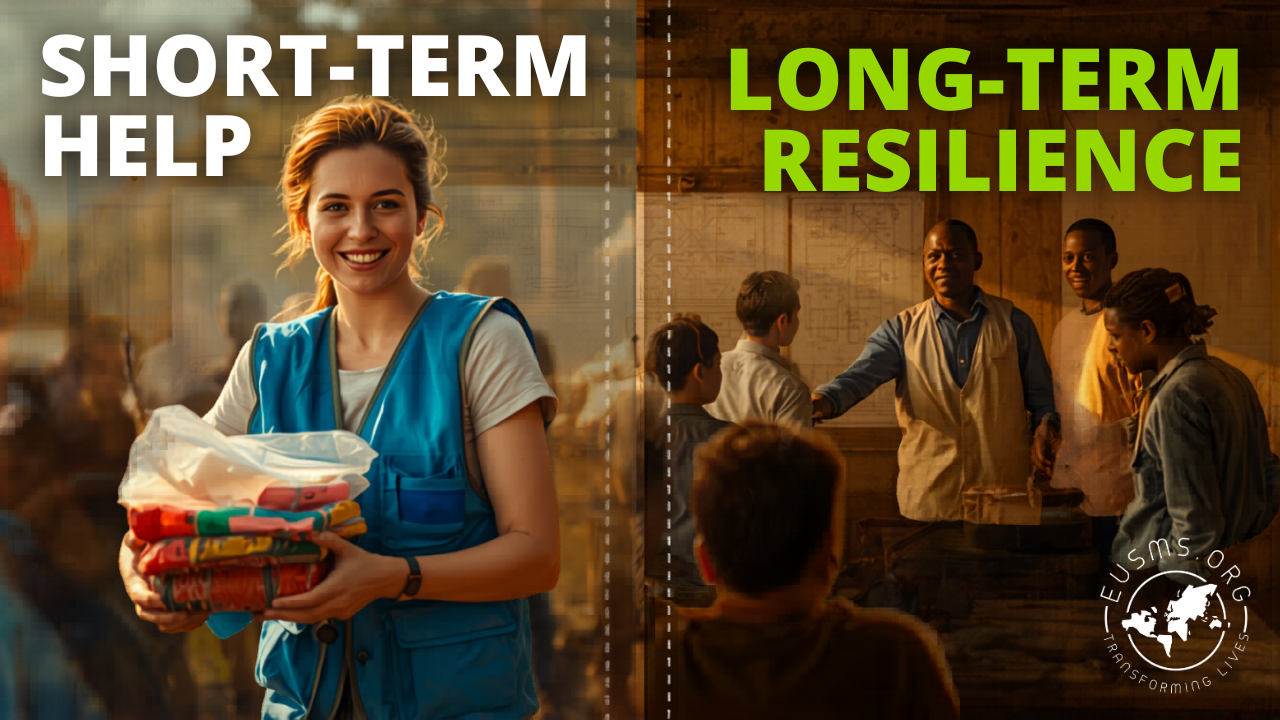
Entrepreneurship, at its core, is the art of building structures that can withstand pressure, structures that hold their shape even when the architect has left the room. When we bring this discipline to Development Aid, we abandon the cycle of sporadic interventions and embrace systemic design. The objective shifts from solving a problem to changing the logic of the environment that generates it.
This is not a semantic difference. It is the difference between an organization that feeds a community for a season and one that ensures that community never goes hungry again. Systems thinking asks harder questions: Who owns this process when we leave? What feedback loops exist to signal when something is breaking? How does this model evolve as the community evolves? Asking these questions and designing for their answers, is what separates the architect from the volunteer.
The Three Pillars of Entrepreneurial Resilience:
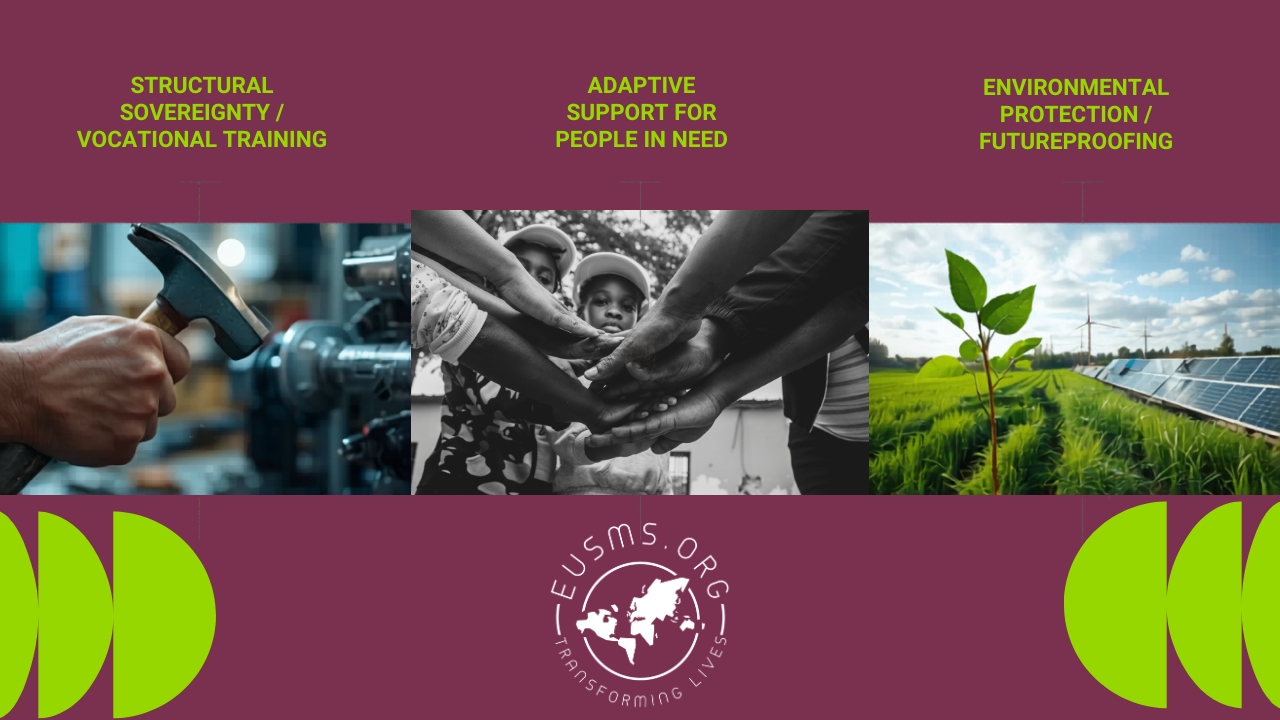
- Structural Sovereignty through Vocational Training: Resilience is not imported; it is cultivated locally. By prioritizing Popular and Vocational Education and Training, we do more than fill a labor gap. We transfer the operating system of an entire industry into the hands of the community itself. When a community owns the skills, it owns the system. It is no longer a dependent in its own economy — it is the author of it. This structural sovereignty is what allows a society to remain standing when external funding fluctuates, when partners change, when the world shifts.
- Adaptive Support for People in Need:A resilient entrepreneur understands that the only constant is change. Our Support for People in Need is engineered with this reality in mind. We build active feedback loops that allow our aid models to pivot on real-time data and lived community experience — not on assumptions made in boardrooms far removed from the ground. This agility is not a luxury. It is the mechanism that ensures our work never calcifies into “what we’ve always done,” but instead moves continuously toward the highest expression of human dignity.
- Futureproofing through Environmental Protection:No system can be resilient if it is built on a collapsing foundation. An entrepreneurial mindset reframes Environmental Protection not as an ethical obligation alone, but as the most fundamental form of risk management. Ecological degradation is economic degradation. By integrating environmental health into our economic models, we future proof the communities we serve against the volatility of climate change. Sustainability, in this framework, it is the very ground on which every other form of progress rests.
Entrepreneurship is ultimately an act of courage, the courage to look at a broken system and refuse to simply navigate around it. It is the decision to build something new rather than inherit something dysfunctional. It is the shift from being a passenger in an economy to being its engineer.
When we focus on resilience and systems, our impact does not remain confined to a moment in time. It becomes a permanent shift in the landscape of possibility, a change that compounds, that propagates, that belongs to the people who made it and will long outlast those of us who helped design it.
That is the legacy of the architect. That is the work of EUSMS.
How are you building resilience into your projects this week?
Let’s rethink the system, together.
By: Stephanie Koligey